A local model can use the web. It still needs a connection.
OGAD (Off Grid AI Desktop) can combine a local model with online search and page-reading tools. The model can run on your computer while a tool sends a query to a search provider or requests a website. Without internet, use the model’s existing knowledge and the local material you supply; it cannot fetch new web pages.
| Download OGAD | Desktop source and releases |
What would you like to do with Off Grid AI?
Have a feature or use case you would like us to support? Tell us what you want to do and which device you use.
Write to support@offgridmobileai.co, join our Slack community, or talk to us on Reddit.
What changes when you turn on web tools?
Two kinds of work take place. The model interprets your request and writes an answer. A tool retrieves information from outside the device. Keeping the first part local does not make the second part local.
This gives you a useful choice. You can draft and analyse saved material without a network, then connect when you need something current. For a client project, that might mean working offline with an approved brief and going online later to check a supplier’s latest specifications.
| Task | Can it work without internet? |
|---|---|
| Rewrite text you paste into a local chat | Yes, with the model already downloaded |
| Ask about a prepared local document | Yes, with the required local model and document setup |
| Explain a concept from model knowledge | Yes, but the answer may be incomplete or outdated |
| Find today’s published information | No, current retrieval needs a connection |
| Read a live URL | No, the page must be fetched |
| Ask a remote model for an answer | No, the host must be reachable |
The source implements separate web-search and URL-reading tools. Search sends a query to an external provider; page reading makes a request to the selected site. Built-in tool implementation.
When is online search useful with a local model?
Use it when the answer depends on a source that can change: a release, a product specification, a public event or a service’s current documentation. Give the model a narrow task and require source links.
For example, a small design firm may need to check a printing supplier’s accepted file formats before preparing artwork. The local model can help read the specification, but the source must come from the supplier’s current page.
Ask:
Find the supplier’s official artwork requirements. List accepted file formats, bleed requirements and the page URL. Separate stated requirements from anything the page does not say. Do not fill gaps with a guess.
Then open the source yourself. The useful result is a short checklist tied to a real page. A polished answer without a supporting source does not settle the question.
How do you try a web-assisted request?
Use a local text model that can handle the available tools. In the chat controls, make the relevant tools available and confirm that the request uses the intended local model. Keep the first query small.
- Ask for one current fact from an official source.
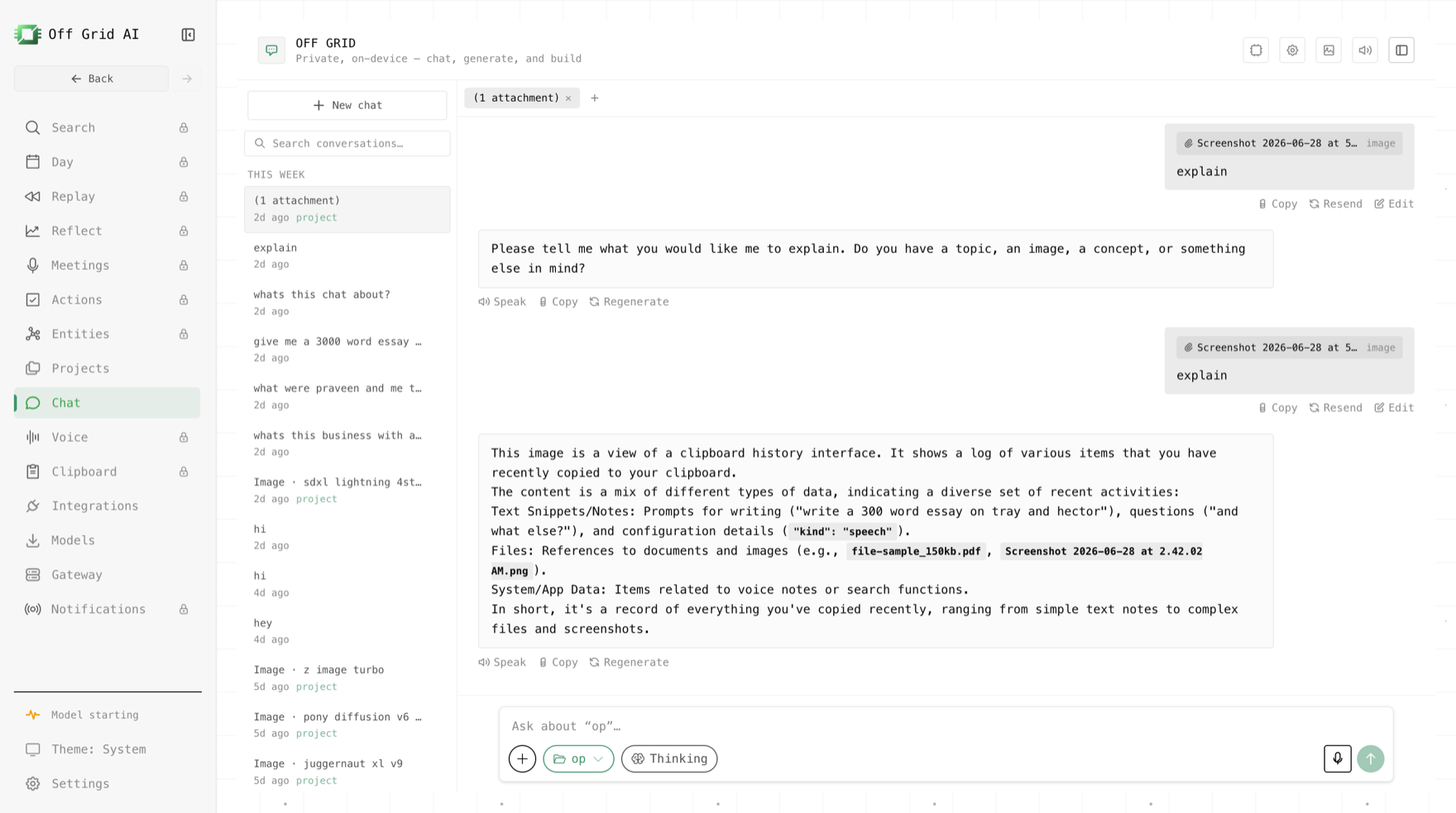
- Look for the search or page-reading activity in the conversation.
- Check the returned links and the date or version of the source.
- Ask for a short answer based only on that source.
- Open the linked page before using a material detail.
If the model answers from memory without retrieving anything, the answer is not a fresh web check. Ask explicitly for retrieval and source links. A model can also fail to call a tool correctly; try a clearer request or a model suited to tool use.
Selecting local inference establishes where the model runs. It does not guarantee that every answer uses a tool, or that every retrieved page is reliable.
What information leaves your device?
A search query goes to the search service. A page request goes to the website. The contents of the request, network details and the service’s own handling rules are separate from your local model setup.
Keep queries specific without adding private material that the search does not need. To find a public specification, use the supplier and product names. You usually do not need to include a client’s private brief, budget or internal correspondence.
Connected model providers and external tools have their own data paths. Review the chosen connection before using it with private work. The Off Grid privacy policy distinguishes ordinary local processing from optional third-party services.
How can you prepare the same task for offline work?
Collect the material you are allowed to use while connected. Save a usable document or paste the relevant text into your own notes. Include its source URL and the date you checked it. Add supported files to an OGAD project when you want to ask questions across that material.
Before disconnecting, ask a question whose answer is in the saved text. Check the cited source or the matching passage. You now have a test that can be repeated offline.
For the printing example, the saved file might contain the accepted formats and bleed requirements. Ask the local model to turn those instructions into a preparation checklist. It can work with the saved content, but it cannot know whether the supplier changed the page after your download.
Label the result accordingly: “Based on the specification saved on this date.” That is more useful than presenting an old copy as a current web check.
What if search does not work?
| What happens | What to check |
|---|---|
| Model replies with no source | Whether a retrieval tool actually ran |
| Search returns no useful results | A shorter query and the official site’s name |
| A URL cannot be read | The address, access restrictions and whether the page needs a browser login |
| Answer cites a different version | The page’s version and publication date |
| Request fails offline | Whether the task requires an external page or remote host |
Some websites restrict automated requests. Others render content in ways a text reader cannot extract. Do not interpret a failed fetch as proof that the information does not exist. Open the site normally and use material you can access lawfully.
Use the right source for the question
For current facts, connect and verify an official page. For private drafts and saved documents, choose a local workflow and test it offline. You can use both in one project while keeping their boundaries clear.
Download OGAD and try one small task: retrieve a public specification, check the source, then make a useful checklist from your saved copy.