A bilingual client update should tell both readers the same thing. OGAD (Off Grid AI Desktop) can help draft two versions from one checked set of project facts. With a local model, you can work on your computer without uploading internal notes to a cloud AI service. The main task is keeping status, dates, and commitments aligned across the two versions.
| Download OGAD | Desktop releases |
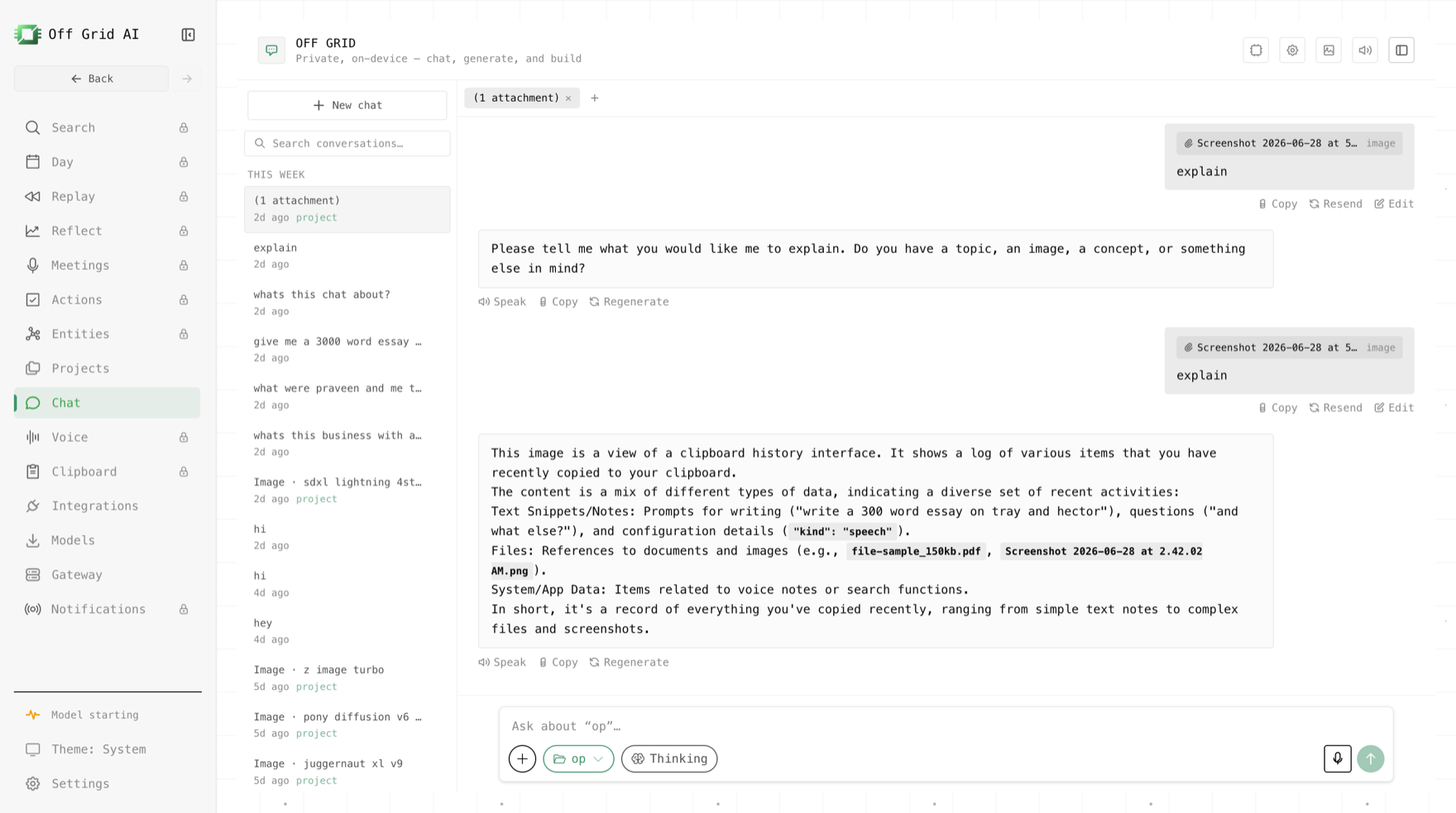
What would you like to do with Off Grid AI?
Want help with this workflow, or a feature you would like us to add? Email support@offgridmobileai.co with your devices and the task you want to improve.
Start with one set of facts
Do not write two independent updates and hope they agree. First create a short fact sheet that both versions will use.
Suppose your team is sending an English and French update about a website project. The design is approved, content is still awaiting client review, and the release date depends on that review. Both versions must preserve the dependency. Neither should imply that launch is confirmed.
Your fact sheet might contain these fields:
| Field | What to include |
|---|---|
| Completed work | Items actually finished or approved |
| Current work | What is in progress |
| Client action | The specific input or decision needed |
| Dates | Confirmed dates and clearly labelled proposals |
| Dependencies | What affects the next commitment |
| Unresolved point | What you cannot yet confirm |
Write the facts yourself or extract them from project notes and check them. The translation stage should not decide the project’s status.
Prepare the model and language pair
Install OGAD and download a local text model that can work with both languages. Select it under Models > Text. Complete the download before disconnecting and test a short sample whose meaning a fluent reader can check.
Language quality depends on the selected model, the language pair, and the subject. Do not assume that a model’s ability to produce fluent sentences means it preserves every condition correctly.
For a short update, paste the checked fact sheet into a fresh chat. For several source files, use Projects > New project, then Knowledge & settings > Knowledge base > Add files, and start Chats > New chat after indexing. Use readable text-based sources and disable Include captured memory, if present, for a source-only draft.
These are core document and chat features. The Projects implementation supplies the source controls. This workflow does not send the update to the client.
Make the first version clear
Write the update in the language you can review most confidently. Ask for direct wording:
Draft a client update from these checked facts. Use sections for completed work, current work, action needed, and next date. Preserve the difference between confirmed and proposed dates. Keep the tone polite and direct. Do not add a commitment or explain a delay using a reason not supplied.
Read this version first. Remove idioms and vague phrases such as “we should be good to go soon.” State the actual condition instead: “We can confirm the release date after the content review.”
A clear source version makes the translation easier to inspect. It also improves the update for the first reader.
Supply a small terminology list
List names, product terms, and phrases that should stay consistent. Mark which terms must remain unchanged.
For example, a product name may stay in English, while “content review” needs an agreed French term. A project code should not be translated at all.
Ask:
Translate the approved update into French using the terminology list. Keep names and project codes unchanged. Preserve dates, quantities, conditions, and the strength of each commitment. Do not add explanations or make the tone more certain than the source.
If you do not have an approved term, label the proposed translation for review. Do not let a guessed term quietly become part of the team’s vocabulary.
Compare the two versions by meaning
Use a numbered paragraph structure so you can compare corresponding sections. Ask for a review table, separate from the client-facing text:
Compare the English and French drafts. For each paragraph, identify the action, owner, date, and condition expressed in each version. Flag any difference. Do not rewrite either version until I review the flags.
This can help locate a mismatch, but the same model may repeat its own mistake. Have a fluent person review important wording, especially changes to scope, price, or delivery commitments.
Back-translation can be another diagnostic tool. It is not proof that the original translation is correct.
Check the most consequential details manually
Use the fact sheet as the reference:
- Does each version request the same client action?
- Does it name the same owner or contact?
- Are all dates written in an unambiguous form?
- Are numbers and units unchanged?
- Is a dependency still present in both versions?
- Does “proposed” remain proposed?
For the website example, the sentence about launch should still depend on content approval. If one version says “we will launch Friday” while the other says “we propose Friday,” fix the difference before sending either.
Choose a readable final layout
For a short update, one complete language version followed by the other is often easier to read than alternating every sentence. For review, a side-by-side table may be better. Choose the format for the reader’s task.
Label the language sections clearly and keep the same heading order. Do not force the versions to have identical word counts; languages need different amounts of text to express the same meaning.
Copy the approved content into your email or document tool. Check that accents, punctuation, links, and line breaks survive the transfer.
Keep a reusable, checked source format
For future updates, reuse the fact-sheet fields and approved terminology. Replace the facts each time. Do not ask the model to infer this week’s progress from an old update.
If you use a project, remember that earlier conversations can provide context. Start a fresh chat for each update and make the current fact sheet explicit. Keep local inference selected for the private drafting workflow; remote models and external tools have separate network behavior.
Download OGAD and start with a four-point client update. Check one source version, translate it with a small glossary, and compare the commitments. That gives both readers the same practical message.