A folder of onboarding documents is not yet a plan for your first week. OGAD (Off Grid AI Desktop) can help turn that material into a checklist of tasks, prerequisites, and questions. Select a local model to work with internal documents on your computer without uploading them to a cloud AI service. Review the checklist with your manager before treating it as your schedule.
| Download OGAD | Desktop releases |
What would you like to do with Off Grid AI?
Have a feature or use case you would like us to support? Tell us what you want to do and which device you use.
Write to support@offgridmobileai.co, join our Slack community, or talk to us on Reddit.
Define what a useful first week looks like
A good checklist should help you become ready to do the work. It should show what you need to read, what you need to set up, who you need to meet, and what remains unclear.
Suppose you are joining a small consultancy. The onboarding folder includes an employee guide, a project introduction, a security checklist, and a delivery process note. The documents describe useful tasks, but they do not put them in a practical order.
You want a first-week plan that reflects those sources. You do not want the model to invent a training programme or assign meetings to people who have not agreed to them.
Choose the right source documents
Start with the current, approved onboarding material. Ask which files apply to your role, location, and equipment. A checklist intended for contractors may differ from one for employees.
Use filenames that make the role and version clear. Include a short note from your manager if it sets priorities. Avoid importing personal information about other staff just because it is in the same folder.
| Source | What to extract |
|---|---|
| Employee or contractor guide | Required reading and applicable rules |
| Equipment setup note | Access requests and prerequisites |
| Role introduction | First responsibilities |
| Delivery process | Work steps you must understand |
| Manager’s note | Agreed priorities and first assignment |
Keep the original files as the authority. Your generated checklist is a working aid.
Prepare the local AI workspace
Install OGAD and download a local text model that fits your computer. Complete the first document import and local search setup while connected. This workflow uses core Projects and chat; it does not need activity capture.
- Select a downloaded model in Models > Text.
- Create a project through Projects > New project.
- Open Knowledge & settings > Knowledge base > Add files.
- Add readable PDF, DOCX, TXT, or Markdown sources and wait for indexing.
- Start Chats > New chat within the project.
If Pro’s Include captured memory is present, turn it off for this document-only task and save. Keep the model local and avoid external tools when you want the prepared workflow to run offline.
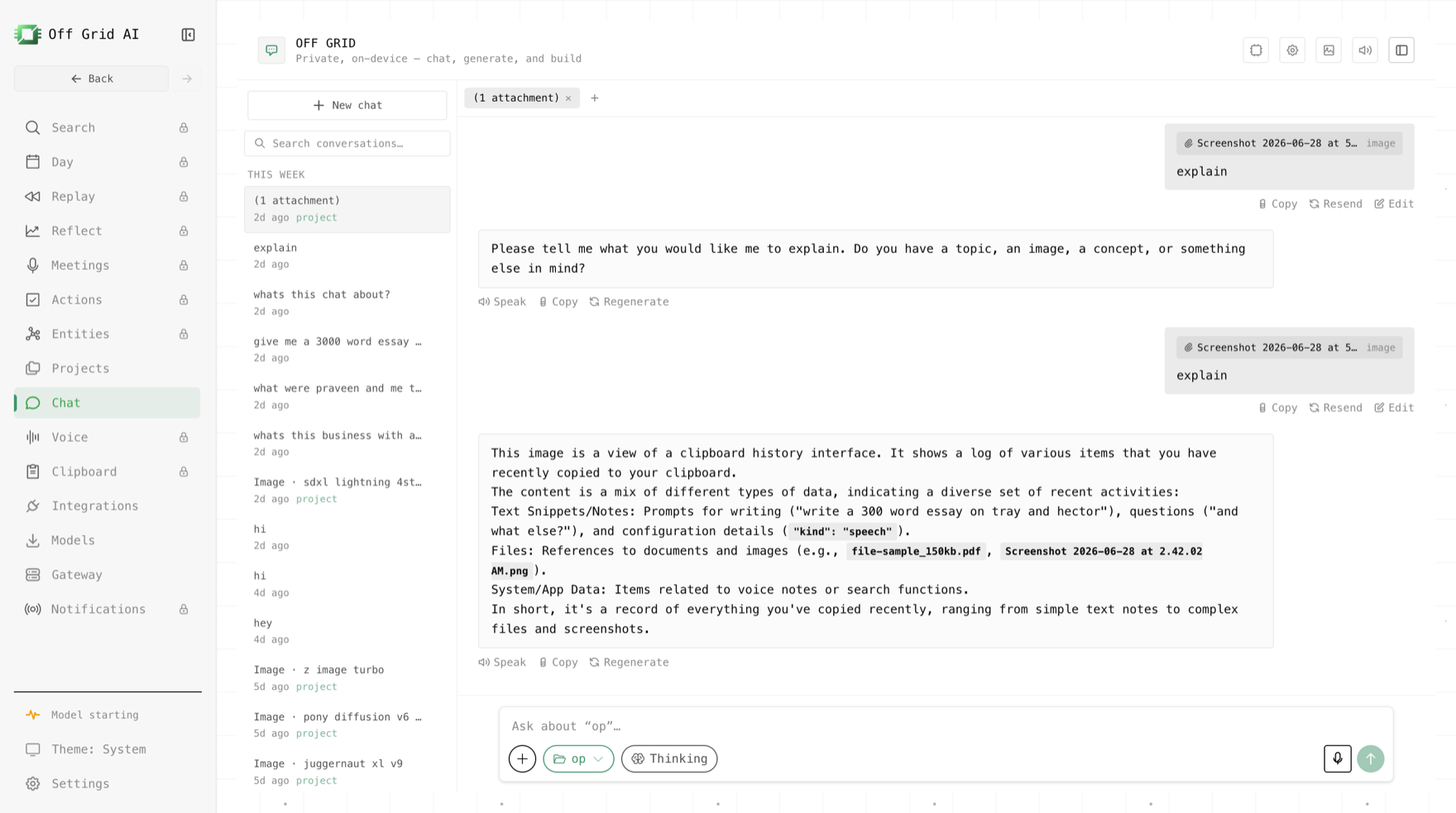
The Projects interface provides the source and instruction controls. A project organises context; it does not grant access to company systems.
Extract tasks before arranging the week
Ask the model for a source-backed task list:
Extract onboarding tasks that apply to the role described in these documents. For each task, include the source file, stated deadline, prerequisite, and person or team to contact if given. Keep missing information marked unknown. Separate required tasks from optional reading.
Check the output against the documents. If a guide says “request access from your manager,” the task is to request access. It is not evidence that you already have access or that the manager will approve it by a particular date.
For a long guide, review the relevant sections separately. Project search retrieves selected passages, so a single broad request may miss an important requirement near the end.
Put tasks in a sensible order
Once you have reviewed the task list, ask for a proposed sequence:
Arrange these checked tasks into a suggested first-week plan. Put prerequisites before dependent tasks. Preserve explicit deadlines. Mark proposed timing as suggested, and do not invent meeting times or owners. Leave room for a manager’s review.
The result may put an account request before tool training, and tool training before the first delivery task. That order is useful even when the exact day is still undecided.
A simple plan could use these sections:
| Stage | Typical purpose |
|---|---|
| Before starting | Confirm required equipment and information |
| First working day | Obtain access and review immediate requirements |
| Early in the week | Learn the team’s process and meet relevant people |
| Later in the week | Attempt a small task with a reviewer |
| End of the week | Review gaps and agree the next priorities |
These are planning categories, not a universal onboarding schedule. Your actual obligations come from the checked sources and team decisions.
Make each checklist item usable
“Learn the process” is difficult to finish. A more useful item states the action and expected result: “Read the delivery checklist and identify who reviews the first draft.”
Ask for this level of detail:
Rewrite each task as an action I can complete. Include a clear completion check. Keep the original meaning and do not add requirements that are absent from the sources.
For access tasks, the completion check might be successfully opening the required tool. For reading, it might be knowing where to find the procedure and who answers questions. Do not replace required training or formal acknowledgements with an AI summary.
Review the plan with your manager
Bring a short list of unresolved points:
- Which task has the highest priority?
- What should wait until access is available?
- Who reviews the first piece of work?
- Which documents are required reading in full?
- What can reasonably be completed this week?
Make agreed changes in your checklist. Keep optional suggestions separate from mandatory tasks so the list remains realistic.
You can ask the model to shorten the plan after review, but check that it has not removed prerequisites or deadlines.
Use the checklist in your normal tools
Copy the approved list into the place where you track work. This document workflow creates text; it does not automatically schedule meetings, create accounts, or mark company training complete.
Avoid putting passwords, recovery codes, or other secrets in an onboarding chat. Reference where access is managed rather than copying credentials into the plan.
If a document is updated, revisit the affected checklist items. A first-week plan should not keep an obsolete instruction simply because it appeared in the first draft.
Download OGAD and try the process with one role guide. Extract five tasks, verify them, and ask your manager which should come first. That gives the document collection a practical starting point.